What is a pulsation dampener in a mud pump?

A pulsation dampener in a mud pump, also referred to as a pulsation stabilizer, accumulator, or surge suppressor, holds a pivotal role within the realm of mud pumps. Its essential purpose lies in the regulation and minimization of pulsations or pressure and flow fluctuations arising naturally from the reciprocating movement of the pump.

Pulsation Dampener

Pulsation Dampener

Continue reading

What is Electrical Stability (ES) in Drilling Fluid?

The Electrical Stability (ES) of drilling fluids holds significant importance in gauging the strength of emulsions. This property is indicative of the fluid’s emulsion stability and its ability to wet oil. Essentially, ES measures the fluid’s resistance to conducting electricity, with higher values denoting a more robust emulsion that resists separation between oil and water components. This stability is paramount for achieving optimal drilling performance and safeguarding the wellbore.

Continue reading

Jack Up Rig for Oil Well Drilling: Let’s Get More Understanding about This Drilling Rig for Offshore Drilling

A jack up rig is a mobile offshore drilling platform commonly used for oil and gas exploration and production in shallow waters. It’s a versatile and efficient platform that offers several advantages over other types of drilling rigs.

Component of a Jack-Up Rig:

Barge or Hull: The primary structure of the rig contains machinery space, generators, mud pits, mud pumps, other drilling equipment, and crew living quarters.

Legs: Typically, three or four retractable legs that can be lowered to the seabed, enabling the rig to be elevated above the mean seal level.

Jacking System: Utilizing hydraulic jacks or electric motors, this system raises and lowers the rig’s legs as needed.

Drilling Equipment: This consists of the derrick, drawworks, mud pumps, and other essential tools for drilling oil and gas wells.

Cantilever: An extended platform over the water that facilitates drilling over the production platform or drilling in the open water location for exploration wells.

Advantages of a jack up rig are as follows;

Mobile: Easily transportable from one location to another.

Stable: Offers a reliable platform for drilling operations in shallow waters.

Self-Contained: Operates independently for extended periods without shore support.

Cost-Effective: Relative cost-efficiency compared to other offshore drilling rigs.

Disadvantages of a jack up rig are as follows;

Limited Water Depth: Operational up to approximately 400 feet of water depth.

Weather-Sensitive: Susceptible to the influence of strong winds and waves.

Environmental Impact:  The jacking process may disturb the seabed and marine life.

Exploring Jack-Up Rigs: Additional Facts:

The first jack-up rig was built in 1954! It was a significant milestone in offshore drilling, marking the beginning of a new era of mobility and efficiency for shallow-water operations.

There are a couple of different contenders for the exact title of the “first”:

  • DeLong Rig No. 1: Built by J.H. DeLong in 1954, this rig is often credited as the first true jack-up, with three retractable legs and a jacking system that allowed it to operate in water depths up to 15 feet.
  • McDermott No. 1: Developed by a joint venture between DeLong and McDermott in 1954, this rig also laid claim to the title of “first,” showcasing a similar jacking system and leg design as DeLong Rig No. 1.

The world’s largest jack-up rig is Maersk Invincible: This rig, built by DSME in South Korea and delivered to Maersk Drilling in 2016, has legs measuring 206.8 meters (678 feet) long, making it the rig with the longest legs in the world. It’s designed for year-round operation in the North Sea, in water depths up to 150 meters.

Maersk Invincible

Maersk Invincible

Beyond oil and gas, jack-up rigs find utility in wind farm construction and offshore platform maintenance.

Conclusion:

Jack-up rigs emerge as curtail offshore rigs in the realm of oil and gas exploration within shallow water area. Their mobility, stability, self-sufficiency, and cost-effectiveness underscore their value, despite limitations related to water depth and susceptibility to weather conditions. In addition to their primary role in hydrocarbon exploration and production, these versatile rigs continue to contribute to diverse applications, shaping the landscape of offshore engineering.

Understanding Drill Pipe Float Valve: Functionality, Types, and Benefits

A drill pipe float valve, also recognized as a non-return valve, is a specialized valve installed in the bottom hole assembly (BHA) and its primary function is to serve as a check valve, permitting the downward flow of drilling mud through the drill string but preventing any unwanted fluid from flowing back up into the drill string.

Continue reading

What is a trip tank and its roles for drilling operation?

A trip tank serves as a compact, calibrated tank typically holding between 20 to 50 barrels, employed in drilling operations to monitor the flow of drilling fluid into and out of the wellbore whether pulling out (tripping out) or running in (tripping in) drill pipe or any tubular in the hole.

As each section of pipe is pulled out, the resulting void must be filled with drilling mud equivalent to the removed steel volume. This process, known as “pulling dry,” prevents a decrease in hydrostatic pressure, which can lead to unwanted wellbore events. The volume of mud pumped in is meticulously recorded on a trip sheet.

Trip tanks help detect potential kicks (inflow of formation fluids) by comparing the actual mud volume pumped in with the calculated displacement volume. If the actual volume is significantly lower, it suggests the well is swabbing and fluids are entering, a key indicator of a potential kick. Conversely, while running pipe in, any excess mud displaced should equal the steel displacement. The image below shows the typical trip tank diagram.

Trip tanks come in various configurations, but all prioritize accurate volume monitoring. The typical design is tall and narrow, allowing for easier detection of even slight changes in fluid level. This ensures precise measurement of fluid gain or loss within the wellbore.

The ability to continuously fill the hole and simultaneously capture returns in the trip tank is highly beneficial. This eliminates the need for constant driller attention, reducing the risk of hydrostatic pressure fluctuations. Comparing the actual trip tank volume changes with the calculated displacement volumes helps identify discrepancies and ensures the well is receiving the appropriate amount of mud. Trip tanks can also be utilized for dedicated wellbore monitoring. By diverting wellbore returns to the tank, even small fluid gains or losses can be identified, providing valuable information during flow checks and other critical operations. The image below shows the actual trip tank on the rig.
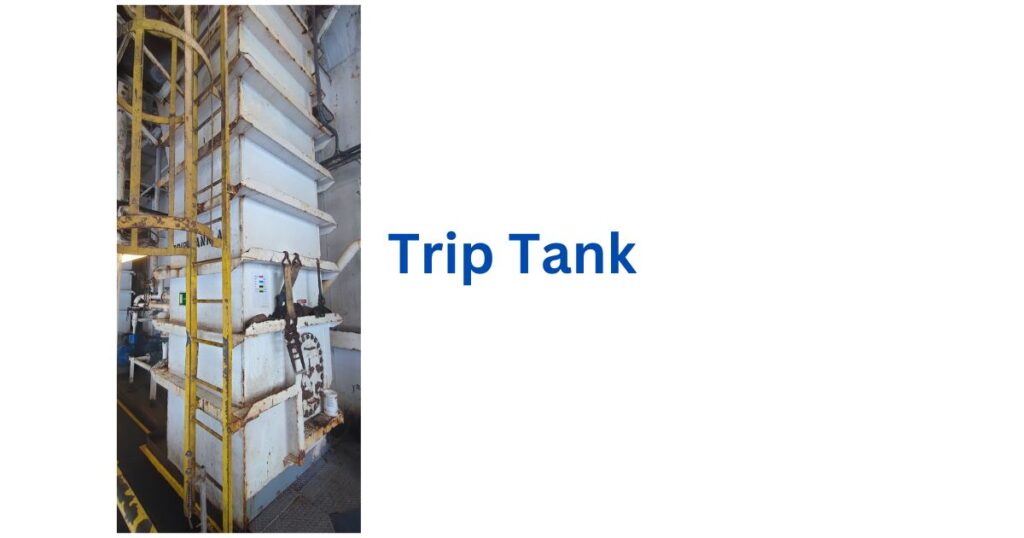
Trip Tank

Trip Tank

Rigorous maintenance of trip tanks is essential. Regular cleaning prevents solids buildup, while inspections ensure proper valve and pump functionality. Additionally, floats and instrumentation require calibration at specified intervals to maintain accuracy.

For even greater accuracy, especially during stripping operations, a separate tank with a smaller capacity (3-4 barrels) can be used. This “strip tank” allows for precise measurement of small fluid volumes before transferring them to the main trip tank for cumulative volume analysis.

Conclusion:

Trip tanks are indispensable tools in drilling operations, ensuring accurate wellbore pressure maintenance, kick detection, and overall wellbore status. By prioritizing reliability, accuracy, and meticulous maintenance, these vital pieces of equipment contribute significantly to a safe and efficient drilling process.

References 

Cormack, D. (2007). An introduction to well control calculations for drilling operations. 1st ed. Texas: Springer.

Crumpton, H. (2010). Well Control for Completions and Interventions. 1st ed. Texas: Gulf Publishing.

Grace, R. (2003). Blowout and well control handbook [recurso electrónico]. 1st ed. Paises Bajos: Gulf Professional Pub.

Grace, R. and Cudd, B. (1994). Advanced blowout & well control. 1st ed. Houston: Gulf Publishing Company.

Watson, D., Brittenham, T. and Moore, P. (2003). Advanced well control. 1st ed. Richardson, Tex.: Society of Petroleum Engineers.