Overburden Stress Shale Causes Stuck Pipe

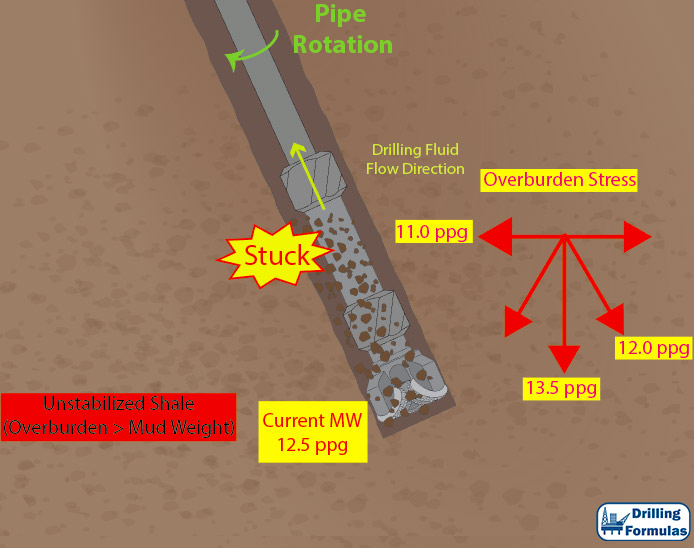
Overburden stress increases over depth (the more a well is drilled, the more overburden stress will be seen). When mud weight is not enough to support the overburden, the stress from the overburden will create shale fractures, which will then fall down into the wellbore. Finally, shale fractures will pack the wellbore and cause a stuck pipe incident,
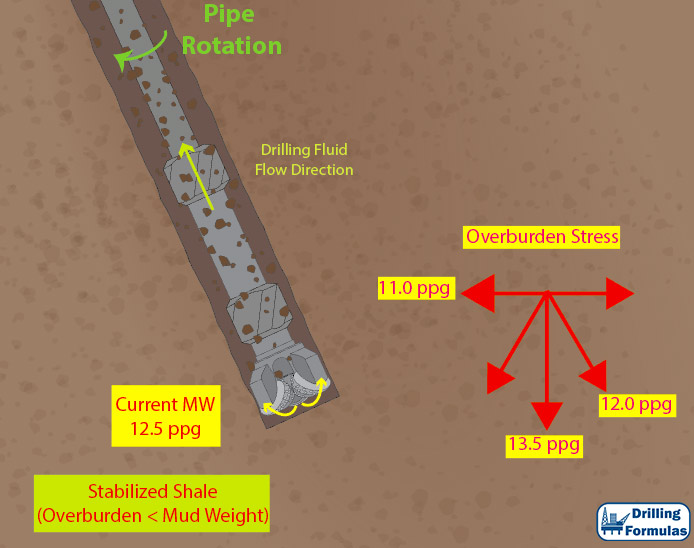
Mud weight is high enough to overcome overburden stress.
Mud weight is high enough to overcome overburden stress.

Mud weight is not high enough to overcome overburden stress.

Mud weight is not high enough to overcome overburden stress.

Warning signs of overburden stress shale

• Torque and drag increase.

• Pump pressure increase.

• Abnormal amount of shale at shale shakers

• Caving shape of shale at shakers

Indications when you stuck due to overburden stress shale

• It could  happen either while tripping or drilling (most likely while drilling).

• When it happens, the hole may be completely packed off or bridged off; therefore, circulation is very difficult or impossible to establish.

What should you do for this situation?

1. Attempt to circulate with low pressure (300-400 psi). Do not use high pump pressure because the annulus will be packed harder and you will not be able to free the pipe anymore.

2. If you are drilling or POOH, apply the maximum allowable torque and jar down with the maximum trip load.

3. If you are tripping in a hole, jar up with the maximum trip load without applying any torque.

4. Attempt until the pipe is freed and circulate to clean wellbore.

 Preventive actions:

1. Use drilling mud that is heavy enough to stabilize overburden stress.

2. Weight up the mud prior to drilling into stressed shale zones.

References

John Mitchell Drilbert Engineering, 2002. Trouble-Free Drilling Volume 1: Stuck Pipe Prevention. Edition. Drilbert Engineering Inc.

Fanarco.net. 1999. Stuck Pipe Prevention Self-Learning Course. [ONLINE] Available at: http://www.fanarco.net/books/drilling/stuck-pipe.pdf. [Accessed 21 June 2016

Steve Devereux, 2012. Drilling Technology in Nontechnical Language, 2d Ed.. 2 Edition. PennWell Corp.

Geo-Pressured Shale Causes Stuck Pipe

Pore pressure in shale is more than hydrostatic pressure; however, the well does not flow because shale is impermeable. While drilling through pressured shale formation, pressure in shale causes fractures of shale due to stress cracks.

Pressure in shale causes fractures of shale due to stress cracks.

Pressure in shale causes fractures of shale due to stress cracks.

Shale finally falls into the well and results in stuck pipe incident.

Geo-Pressured-Shale-Causes-Stuck-Pipe-2

Shale falling into the well.

Continue reading

Hydro-Pressured Shale Causes Stuck Pipe

Hydro-pressured shale is a common problem in some areas where shale become unstable under period of time. With mud weight in the wellbore higher than formation pressure, the pore pressure of shale is always charged by hydrostatic pressure from drilling mud.

Charged pressure due to hydrostatic pressure

Shale is charged by hydrostatic pressure.

When the well has been drilled for a period of time, shale formations become unstable due to charged pressure and finally shale breaks apart and falls down into the hole.

Shale becomes unstable.

Shale becomes unstable.

Then, a drill string gets stuck due to hydro-pressured shale which has accumulated in the annulus.

Pipe becomes stuck by unstable shale.

Pipe becomes stuck by unstable shale.

This process is time dependent just like shale instability. It may take days before the stuck pipe situation will occur.

Warning signs of hydro-pressured shale:

• Torque and drag increase.

• Over pull may be observed.

• Observe shale caving in on shale shakers

 Indications when you stuck due to hydro-pressured shale:

• When it happens, the hole will be either partially bridged off or packed off; therefore, circulate is restricted or impossible in some cases.

• It could happen while tripping and drilling.

What should you do for this situation?

1. Attempt to circulate with low pressure (300-400 psi). Do not use high pump pressure because the annulus will be packed harder and you will not be able to free the pipe anymore.

2. If you are drilling or POOH, apply the maximum allowable torque and jar down with the maximum trip load.

3. If you are tripping in a hole, jar up with the maximum trip load without applying any torque.

4. Attempt until the pipe is freed and circulate to clean the wellbore.

Preventive actions:

1. Use oil based mud instead of water based mud because oil will not react with shale.

2. Minimize surge pressure and equivalent circulating density (ECD) in the wellbore.

3. Keep mud properties in good shape. Avoid drilling and circulating with thick mud because it creates additional surge pressure.

References

John Mitchell Drilbert Engineering, 2002. Trouble-Free Drilling Volume 1: Stuck Pipe Prevention. Edition. Drilbert Engineering Inc.

Fanarco.net. 1999. Stuck Pipe Prevention Self-Learning Course. [ONLINE] Available at: http://www.fanarco.net/books/drilling/stuck-pipe.pdf. [Accessed 21 June 2016

Steve Devereux, 2012. Drilling Technology in Nontechnical Language, 2d Ed.. 2 Edition. PennWell Corp.

Shale Instability Causes Stuck Pipe

Shale instability happens when shale formation becomes unstable and finally, formations break apart and fall into an annuls.

Water in the mud absorbed by shale formations causes a swelling effect on formations. When there is a lot of water, shale will not be able to hold their particles together and finally will fall apart into the well. Finally, shale particles will jam a drill string.

The shale instability is a chemical reaction which is time dependent. It means that it may not be seen on the first day but it will be able to see after drilling has been carried out for several days.

The three illustrations below will help you get more understanding about shale instability and stuck pipe.

Day#1: Water is absorbed by shale

Day#1: Water is absorbed by shale

Day#2: Shale swelling due to water and shale starts falling apart.

Day#2: Shale swelling due to water and shale starts falling apart.

(Day#4: A lot of shale falls down and causes stuck pipe)

Day#4: A lot of shale falls down and causes stuck pipe

Warning signs of shale instability

• Torque and drag increase. An over pull may be observed.

• Mud properties became worse. You will see an increase in plastic viscosity, yield point (drilling mud becomes thicker).

• Pump pressure increases.

• Observe soft shale over shale shakers.

Indications when you stuck due to shale instability

• When it happens, you may observe very high pump pressure at a small rate and sometimes circulation may be impossible.

• Most of the time it will happen when pulling out of a hole. However, it can be possibly occurred while drilling as well.

What should you do for this situation?

1. Attempt to circulate with low pressure (300-400 psi). Do not use high pump pressure because the annulus will be packed harder and you will not be able to free the pipe anymore.

2. If you are drilling or POOH, apply maximum allowable torque and jar down with maximum trip load.

3. If you are tripping in hole, jar up with maximum trip load without applying any torque.

4. Attempt until pipe is free and circulate to clean wellbore.

Preventive actions

1. For water based mud – you may need to add some salts that are compatible with a mud formula in order to reduce chemical reaction between water and shale. Moreover, you should consider adding some coating polymers to prevent water contact with formation.

2. Use oil based mud instead of water based mud because oil will not react with shale.

3. Keep good flow rate to ensure good hole cleaning.

4. Perform back reaming and/or wiper trip.

5. Keep good mud properties.

References

John Mitchell Drilbert Engineering, 2002. Trouble-Free Drilling Volume 1: Stuck Pipe Prevention. Edition. Drilbert Engineering Inc.

Fanarco.net. 1999. Stuck Pipe Prevention Self-Learning Course. [ONLINE] Available at: http://www.fanarco.net/books/drilling/stuck-pipe.pdf. [Accessed 21 June 2016


Cutting Settling in Deviated Wells Cause Stuck Pipe

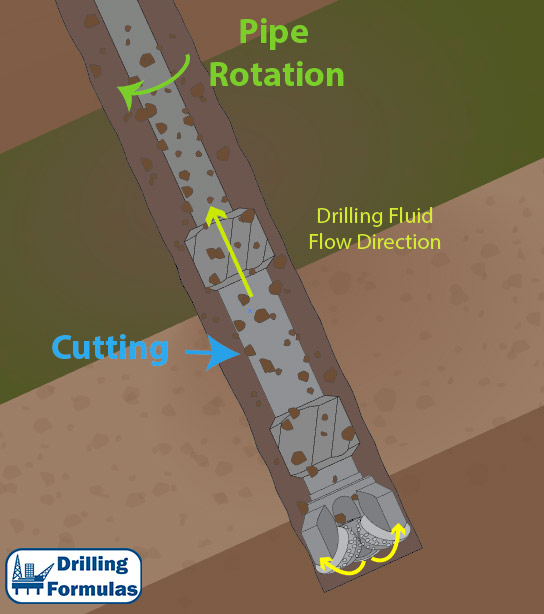
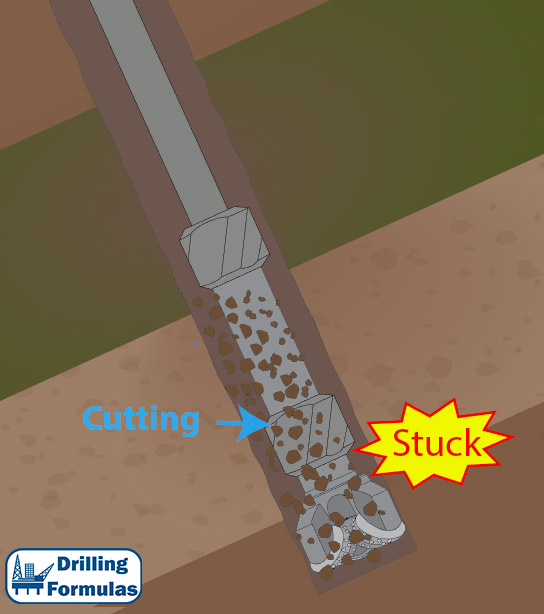
For deviated wells, cuttings tend to accumulate at the low side of the wellbore and form a cutting bed. When there is a lot of cutting bed, it will fall down and pack the string when circulation is ceased. Moreover, while pulling out of a hole, BHA will move some cutting beds and finally, the cutting bed will pack BHA and drill string (stuck pipe).

Note: A well which has an inclination of more than 35 degrees is classified as a deviated well.

Cutting movement while drilling in a deviated well

Cutting movement while drilling in a deviated well

Cutting settling while stop drilling in a deviated well

Cutting settling while stop drilling in a deviated well causes stuck pipe

Continue reading