


We have learned 2 cases about shoe pressure when kick is underneath shoe, and kick is passing the shoe,
When gas kick is being move above the shoe, do you know how much pressure at shoe has?

I will explain this case via this blog post.
We have learned 2 cases about shoe pressure when kick is underneath shoe, and kick is passing the shoe,
When gas kick is being move above the shoe, do you know how much pressure at shoe has?
I will explain this case via this blog post.
For this case, we will consider the shoe pressure when the gas kick is passing the casing shoe. See the image below.
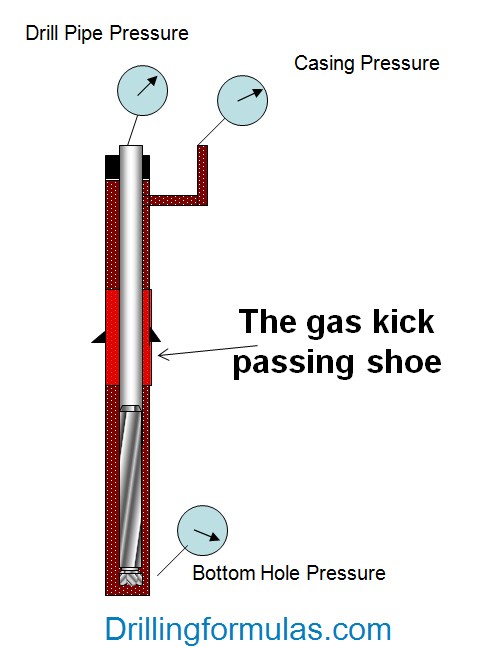
Let’s apply the hydrostatic pressure concept.
The formula for the bottom hole pressure is listed below:
Bottom Hole Pressure = Pressure at casing shoe + Hydrostatic Pressure in the open hole underneath the shoe
I would like to address about the shoe pressure concept while while circulating gas influx out of wellbore. This is the fist scenario – Top of the gas kick below the casing shoe

The hydrostatic pressure above the casing shoe remains constantly because the fluid column is the same. If we don’t let casing pressure increase, the over all hydrostatic pressure in the well will decrease because gas expansion when it is being circulated. In order to maintain the bottom hole pressure constant, casing pressure will increase to balance the loss of hydrostatic pressure in the wellbore due to gas expansion.
Kick Tolerance is the maximum volume of gas kick in barrels that we are able to successfully shut the well in and circulate the kick out of hole without breaking formation strength at shoe depth or overcoming the weakest anticipated facture pressure in wellbore.In order to calculate kick tolerance, we need to assume Kick Intensity (ppg), the depth that kick will happen, mostly is TD.

I just have new oil field knowledge VDO about flow check. Please check this one.
I wish this VDO would be advantageous for you.
Reference books:  Well Control Books
