Know about Swabbing and Well Control

There are several situations when a kick is induced by swabbing effect. Today, we are going to discuss swabbing and well control situation. Swabbing is a condition when the string is pulled out of the well and it creates temporary bottom hole pressure reduction. If the hydrostatic pressure reduction is large enough to create underbalance condition, the well will eventually flow.
24-Know-abou-Swabbing-and-Well-Control-cover

When you swab the fluid in, the swabbed fluid may not necessarily cause pit gain or the well flowing because the volume swabbed in is not significant. However, if you have several swabbed-in fluid, the well will finally flow.

Figure 1 - Take Swabbed Kick

Figure 1 – Take Swabbed Kick

It is quite tricky to recognize the swabbing volume and the most trustable method to detect is by tracking hole fill volume. For example, if the volume displacement for 10 stands pulled is 8 bbl but the hole fill volume is just only 6 bbl, 2 bbls of kick may possibly be swabbed in while tripping out. Once the swabbing is detected, you need to trip back to the bottom and circulate bottom up even though the well is not flowing. If you don’t go back to the bottom, it will be very difficult to control the well off bottom once the swabbed gas moves up to shallower depth of the well. Continue reading
Mud Gas Separator (Poor Boy Degasser) Plays A Vital Role in Well Control Situation

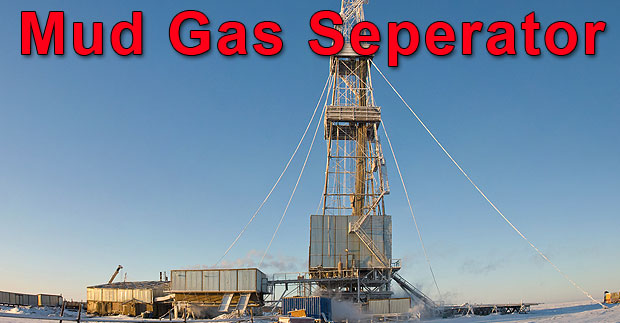
Mud gas separator located at downstream of the choke manifold is one of the important well control equipment that you need to focus. It separates gas out of the mud after the gas comes out of hole. Gas will be vent to atmosphere via the vent line in derrick (offshore operation) or the line away from the rigs (land operation) and the mud will be returned back to the pit.

In the oilfield, people have several names for the mud gas separator as “poor boy degasser” or “gas buster”. While drilling, the mud gas separator should be lined up at all times and filled with the present mud weight currently used.

mud-gas-seperator

The concept of this equipment is density difference between liquid and gas. When the mud coming out from the choke manifold goes into the mud gas separator, mud will hit the baffle plates which are used to increase travelling time and allow gas to move out of the mud. Gas which has lower density than air will move up and mud will goes down due to gravity (see – Figure 1). Mud leg will provide hydrostatic pressure in order to prevent mud going through the separator into the rig. Continue reading

Abnormal Pressure Caused By Faulting

Fault is a discontinuity in a geological structure and it sometimes can create abnormal pressure. Hence, you need to really understand how the geological fault can cause higher pressure even though it comes from the same reservoir.

abnormal-pressure-by-faulting

There are three fault types which are as follows;

  • Strike-slip, where the offset is predominately horizontal, parallel to the fault plane.
  • Dip-slip, offset is predominately vertical and/or perpendicular to the fault plane.
  • Oblique-slip, combining significant strike and dip slip.

Continue reading

Behavior of Gas in a Horizontal Well Kick

Gas kick behavior in horizontal wells is different from the gas behavior in normal wells (vertical and deviated wells). Gas follows Boyle’s gas law when it moves up to the shallower section of the wellbore. However, in the horizontal section, there is no change in volume because gas will move up to high side of the wellbore and there is no change in pressure.

behaviors-of-Gas-in-a-Horizontal-Well-Kick-cover

The gas kick volume will increase when the kick is circulated out of the horizontal section because the reduction in hydrostatic pressure results in expanding of gas as per Boyle’s gas law (see below).

Boyle’s Law

P1 x V1 = P2 x V2

Continue reading

Kick Prevention for Horizontal Wells

After we’ve learnt several topics in regard to horizontal well control, today we will talk about how to prevent well control situation both while drilling and while tripping. Since the horizon well control is quite tricky when compared to normal well control due to long reach horizontal section, the best way is to prevent it.

kick-prevention-for-horizontal-wells

How To Prevent Kick While Drilling (Horizontal Wells)

Continue reading