Maximum pit gain from gas kick in water based mud

In water based mud, you can not only estimate the maximum surface casing pressure, but you are also be able to determine the maximum pit gain due to gas influx.

The following formula demonstrates how to figure out the maximum pit gain from gas influx in water based mud system.
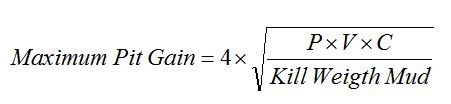
maximum pit gain


Where

Maximum Pit Gain in bbl

P is formation pressure in psi.

V is original pit gain in bbl.

C is annular capacity in bbl/ft.

Kill Weight Mud in ppg

Let’s take a look at this following example in order to get more understanding regarding this topic.

Drill well with water based mud.

Pit gain = 20 bbl

Initial shut in casing pressure = 600 psi

Initial shut in drill pipe pressure = 500 psi

Current mud weight = 12.5 ppg

Hole depth = 6,000’MD/4,800’TVD

Hole diameter = 12-1/4 inch

Drill pipe = 5 inch

According to the data, you need to figure out the Kill Mud Weight , formation pressure, and annular capacity.

Kill Weight Mud = current mud weight + (shut in drill pipe pressure ÷ (0.052 x TVD))

Kill Weight Mud = 12.5 + (500 ÷ (0.052 x 4800)) = 14.5 ppg

Note: Please read the following link about kill weight mud -> well control formulas

Formation pressure = surface pressure + hydrostatic pressure

Formation pressure = 500 + (0.052 x 12.5 x 4800) = 3620 psi

Note: Please read the following link about formation pressure -> Formation Pressure from Kick Analysis

Determine annular capacity: Annular capacity = (12.252 – 52) ÷ 1029.4 = 0.1215 bbl/ft

Note: if you would like to understand annular capacity, please check out the following links -> Annular Capacity

Once you get all parameters required, you can add all of them into the equation like this.
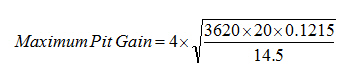
Maximum Pit Gain = 98.5 bbl

References

Cormack, D. (2007). An introduction to well control calculations for drilling operations. 1st ed. Texas: Springer.

Crumpton, H. (2010). Well Control for Completions and Interventions. 1st ed. Texas: Gulf Publishing.

Grace, R. (2003). Blowout and well control handbook [recurso electrónico]. 1st ed. Paises Bajos: Gulf Professional Pub.

Maximum Surface Pressure from Gas Influx in Water Based Mud

When a well is shut in due to well control operation, the casing pressure will increase due to gas migration and gas expansion. In water based mud, you are able to estimate the maximum surface pressure with this following formula.

Where;

Max surface pressure in psi.

P is expected formation pressure in psi.

V is pit volume gain in bbl.

KWM is kill weight mud in ppg.

An is an annular capacity in bbl/ft.

Continue reading

Hydrostatic Pressure Loss Due to Gas Cut Mud

When you get gas-cut into your drilling mud, it will reduce mud weight causing hydrostatic pressure decrease. The concept of this calculation is to calculate pressure based on pit gain. You can calculate hydrostatic pressure loss with this following equation.

The following equation is used for calculation:

Oilfield Unit

Hydrostatic pressure decrease = (Mud gradient ÷ Annular Capacity) × pit volume gain

Where:

Hydrostatic pressure decrease in psi

Mud gradient in psi/ft

Annular Capacity in bbl/ft

pit volume gain in bbl

Example

Mud weight = 13.0 ppg

BHA diameter = 6 inch

Hole diameter = 8.5 inch

Pit volume gain = 15 bbl

Mud gradient = 0.052 × mud weight = 0.052 × 13 = 0.676 psi/ft

Annular capacity = (8.52 – 62) ÷ 1029.4 = 0.0352 bbl/ft

Hydrostatic pressure decrease = (0.676 ÷ 0.0352) × 15 = 288 psi.

Metric Unit

Hydrostatic pressure decrease = (Mud gradient ÷ Annular Capacity) × pit volume gain

Where:

Hydrostatic pressure decrease in KPa

Mud gradient in KPa/m

Annular Capacity in m3/m

pit volume gain in m3/m

Example

Mud weight = 1440 kg/m3

BHA diameter = 152  mm

Hole diameter = 216 mm

Pit volume gain = 2.4 m3

Mud gradient = 0.00981 × mud weight = 0.00981 × 1440 = 14.126 KPa/m

Annular capacity = (2162 – 1522) ÷ 1,273,240= 0.0185 m3/m

Hydrostatic pressure decrease = (14.126 ÷ 0.0185) × 2.4 = 1833 KPa

Note: if you would like to understand about mud gradient and annular capacity, please check out the following links:

Calculate mud gradient

Calculate annular capacity

Download Free Excel Spread Sheet 

References

Cormack, D. (2007). An introduction to well control calculations for drilling operations. 1st ed. Texas: Springer.

Crumpton, H. (2010). Well Control for Completions and Interventions. 1st ed. Texas: Gulf Publishing.

Grace, R. (2003). Blowout and well control handbook [recurso electrónico]. 1st ed. Paises Bajos: Gulf Professional Pub.

How to Prevent Well Ballooning

This topic will you describe how to prevent well ballooning. There are several items that you can manage in order to prevent or minimize well ballooning.

Trying not to lose fluid or to minimize drilling mud loss into formation is the best way to prevent well ballooning. As you may know from the previous topic, well ballooning basic, before ballooning will happen, you must have downhole losses. Then, flow back will occur when pumps are off.

There are several ways that can help you on this issue as listed below:

Continue reading