This article will focus on block and drilling line calculations as block efficiency, drilling power input/output, etc. Additionally, there are some examples which will help you understand how the formulas work.
Block and drilling line efficiency formula is described below;
Cementing is very critical step of well construction. Bad cement job can lead to bad situations as well control, low productivity, gas channeling in annulus, etc. Therefore personnel in oilfield should learn and understand this topic. It is quite hard to find very good vdo training in the topic of oil well cementing but we finally find it. This VDO training is very excellent because it teaches all the basic with animations which absolutely helps learners fully understand this topic. Additionally, we add full VDO transcript so it will help some people who cannot catch all the wording in the VDO training. Please feel free to add comments and/or suggestions and we wish you would enjoy learning from this post.
Full VDO Transcript
Here is an overview of casing cemented in a well called primary cementing. The cement’s main jobs are to completely isolate or totally seal off all the oil, gas and water zones from the well bore and to bond the casing firmly to the wall of the whole. Here the crew has drilled the well to the casing point, the depth at which they will set and cement casing. The driller circulates drilling mud to clean the hole and to make sure the mud is in good condition. Then the crew pulls the drill string out of the hole. The next step in primary cementing is for the casing crew to run the casing into the well, one joint at the time. Notice at the bottom of the casing, the guide shoe and float collar. Also notice the centralizers and scratchers. The guide shoe guides the first joint of casing into the well bore. A valve in the float color lets the crew float the casing into the well to lessen the load on the rig’s hoisting system. Continue reading →
1029.4 is used in several calculations in the oilfield and we’ve been asked about what is 1029.4, how it comes from, why it needs to be this figureso in this article, we will show you how 1029.4 comes from.
First of all, we would like to give someone about the background of this figure. The 1029.4 is widely used for capacity calculations. The following equations utilizing 1029.4 are listed below; Continue reading →
We learn from the past in order to prevent the bad incidents to be happened. This time we would like to discuss about Sedco 135F – IXTOC I Blowout and Oil Spill. The Sedco 135F was perforating and drilling the IXTOC I well in 1979 for PEMEX, which is a petroleum company in Mexico owned by the state at the time when the well underwent an eruption. Through a drilling, the well had been dug up to 3.6 km with the 9-5/8″ casing set at 3.6 km. It has been vindicated by various studies that there was a failure in mud circulation (essentially mud is a massive and heavy weighted drilling fluid which is utilized as a lubricant for the drill bit, helps in cleaning the drilled rock from hole and present a column of hydrostatic pressure as a prevention from influxes), hence a consensus was reached that it is the best to pull the drill string & plug the well. The absence of mud column’s hydrostatic pressure triggered an unconstrained and liberal circulation of oil & gas to the surface, and this was what happened when the crew was working with drillstring’s lower part. The BOP was shut on the pipe however it was unable to chop the chunky drill collars, permitting oil and gas to come up to the surface where it burned and inflamed the Sedco 135F. The rig broke down and drowned on top of the wellhead space on the seabed, cluttering the seabed with debris like the rig’s derrick & 3000m of pipe.
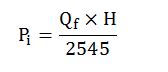
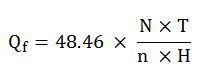
In this article, we will focus on the rig engine power consumption and overall engine efficiency and there are few examples for you to get more understand on how to use the formulas as well.