Drill Bits VDO Training

Drilling bits are one of the key tools to achieve good performance drilling and there are several types of bits. Therefore, personnel need to understand in order to use the right bits for the task. Today, we would like to share this excellent VDO teaching you about drilling bits. This VDO is excellent for everybody because it has a lot of illustrations and animations along with full explanations. As usual, we have full VDO transcript for anyone who cannot catch the wording from this footage.

VDO Transcript

drilling-bit

As we discussed in the last section, crew members install the bit on the on the bottom drill collar. Two kinds of bits are roller cone bits and fixed cutter bits. Fixed cutter bits are also called fixed head bits. Roller cone bits usually have three cone shaped devices with teeth or cutters. As the bit rotates the cone and cutters rotate to drill a head. Fixed head bits also have cutters but manufacturers embed them in the bit’s head. The bit’s head moves only when the bit rotates. It has no moving parts like the cones on a roller cone bit. Both roller cone bits and fixed head bits come in sizes ranging from 2 or 3 inches or about 50 – 75 millimeters in diameter to more than 36 inches about 1 m in diameter.

Continue reading

Drill string valves and IBOPs VDO Training

Drillstring valves and IBOPS are one of the most critical well control equipment on the rig. This VDO training will teach you about drillstring valves and iBOPs. After watching this, you will fully understand several of the valves and their applications. Additionally, we also have full VDO transcript to help anyone who are unable to fully understand the English speaking in the VDO. We wish you would enjoy watching it.

Full VDO Transcript

Drill-string-valves-and-IBOPs

Drill string valves stop fluid from flowing up the drill string often if the drill kicks with the bit off bottom. Formation fluids flow from the annulus and up the drill string. Crewmembers close of the drill string valves. The flow is in the string, If the Kelly is made up the can close the upper or lower Kelly cock. If the Kelly is not made up then they can install the full opening safety valve in the top of the drill string.

Continue reading

Introduction To Underbalanced Drilling VDO Training

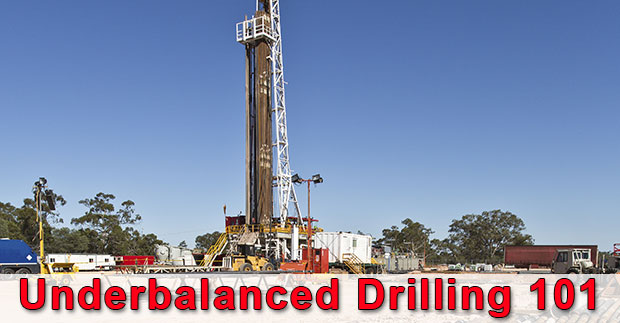
Underbalanced drilling becomes very famous in several places of the world because there are some advantages over normal drilling operations. Today we would like to share the basic underbalanced drilling 101 for everybody who is interested in this topic. It is presented by Shell and we also add full VDO transcript for anybody who cannot catch the information from this presentation.

Underbalanced Drilling 101 Full VDO Transcript
underbalanced-drilling-101

This presentation introduces the concept and equipment used in underbalanced drilling operations. The key differences between underbalanced drilling and conventional overbalanced drilling are at both the conceptual and the technical level. At the conceptual level the subsurface drilling conditions needs to be investigated further, the rotating drill bit cuts away rock to deepen the well. The drill cuttings are lifted to the surface by the circulating drilling fluid.

Continue reading

Oil & Gas Well Cementing VDO Training

Cementing is very critical step of well construction. Bad cement job can lead to bad situations as well control, low productivity, gas channeling in annulus, etc. Therefore personnel in oilfield should learn and understand this topic. It is quite hard to find very good vdo training in the topic of oil well cementing but we finally find it. This VDO training is very excellent because it teaches all the basic with animations which absolutely helps learners fully understand this topic. Additionally, we add full VDO transcript so it will help some people who cannot catch all the wording in the VDO training. Please feel free to add comments and/or suggestions and we wish you would enjoy learning from this post.


  Full VDO Transcript

Oil-&-Gas-Well-Cementing

Here is an overview of casing cemented in a well called primary cementing. The cement’s main jobs are to completely isolate or totally seal off all the oil, gas and water zones from the well bore and to bond the casing firmly to the wall of the whole. Here the crew has drilled the well to the casing point, the depth at which they will set and cement casing. The driller circulates drilling mud to clean the hole and to make sure the mud is in good condition. Then the crew pulls the drill string out of the hole. The next step in primary cementing is for the casing crew to run the casing into the well, one joint at the time. Notice at the bottom of the casing, the guide shoe and float collar. Also notice the centralizers and scratchers. The guide shoe guides the first joint of casing into the well bore. A valve in the float color lets the crew float the casing into the well to lessen the load on the rig’s hoisting system.
Continue reading

Oil & Gas Well Casing – VDO Training

There are several articles discussing about casing design and we would like to share you this excellent VDO training in this topic “Oil & Gas Well Casing”. This VDO contains the basic over view of casing starting from surface to production section.  You will see nice illustrations which help you get clearer picture on this topic and we also add full VDO transcripts to provide assistance to some learners who cannot catch the content in this VDO clearly.

Oil & Gas Well Casing – VDO Transcript

oil-Gas-Well-Casing

By the time the crew drills the well to depth, it usually has several strings of casing in it. These strings are called conductor casing, surface casing, intermediate casing and production casing.

Notice that cased well looks something like a telescope pulled out of full-length but it is as the crew drills the well deeper, the size of the whole and the size of the casing gets smaller in diameter. Almost always, the drilling contractor cannot begin drilling at the surface and go all the way to total depth in one step.

Continue reading