Maximum Initial Shut-In Casing Pressure (MISICP)

Maximum Initial Shut-In Casing Pressure (MISICP) or Maximum allowable shut in casing pressure is the initial shut-in casing pressure that will exceed formation strength at the casing shoe resulting in broken formation at the shoe.

How can we know and calculate the MISICP?

Leak Off Test (LOT) will tell you the maximum pressure which the shoe can withstand before breaking formation at the shoe. The LOT is the combination of surface pressure and hydrostatic pressure therefore you can apply this principle to calculate the MISICP.

Continue reading

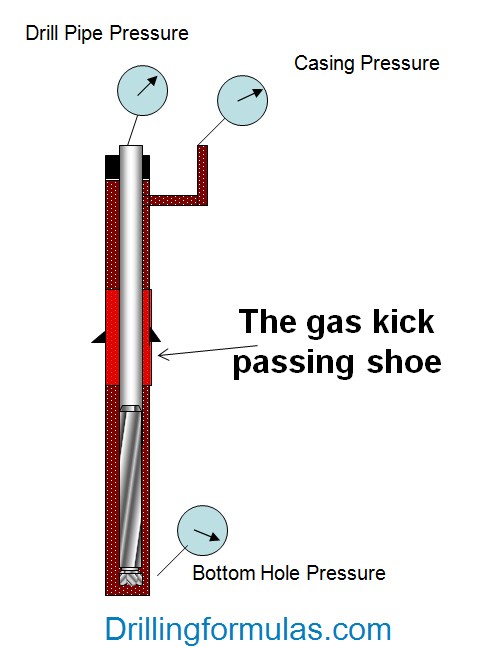
Understand shoe pressure – Shoe pressure when the gas kick Passing Shoe

For this case, we will consider the shoe pressure when the gas kick is passing the casing shoe. See the image below.

Understand shoe pressure – Shoe pressure when the gas kick Passing Shoe

Let’s apply the hydrostatic pressure concept.

The formula for the bottom hole pressure is listed below:

Bottom Hole Pressure = Pressure at casing shoe + Hydrostatic Pressure in the open hole underneath the shoe

Continue reading

Understand shoe pressure – Top of Gas Kick Below the Shoe

I would like to address about the shoe pressure concept while while circulating gas influx out of wellbore. This is the fist scenario – Top of the gas kick below the casing shoe

Understand shoe pressure - Top of Gas Kick Below the Shoe

The hydrostatic pressure above the casing shoe remains constantly because the fluid column is the same. If we don’t let casing pressure increase, the over all hydrostatic pressure in the well will decrease because gas expansion when it is being circulated. In order to maintain the bottom hole pressure constant, casing pressure will increase to balance the loss of hydrostatic pressure in the wellbore due to gas expansion.

Continue reading