About DrillingFormulas.Com

Working in the oil field and loving to share knowledge.

Halliburton and Baker Hughes abandon $34.6bn Takeover

Breaking NEWS for our industry!!
halliburton-and-baker-call-off

US oil services companies Halliburton and Baker Hughes have called off their proposed merger after resistance from regulators in the US and Europe.

The deal, announced in 2014, would have seen a $34.6bn takeover by Halliburton of Baker Hughes, creating a powerful rival to global leader Schlumberger.

Halliburton and Baker Hughes are the second and third biggest oil services companies.

That raised concerns about higher prices and reduced competition.

Baker Hughes stands to receive a $3.5bn break-up fee as a result of the deal falling through.

Failure to satisfy regulatory concerns was not the only reason for abandoning the merger. Continue reading

Determine Compressibility Factor with Present of CO2 and H2S

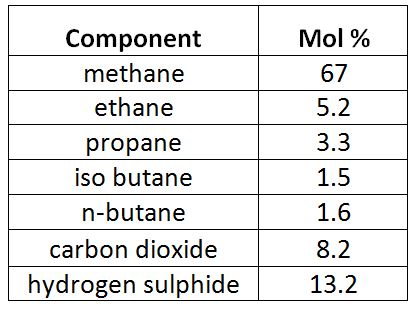
This example will demonstrate how to determine the compressibility factor (z) for gas with CO2 and H2S. As it is described in the article,Determine Compressibility of Gases , it states that gas with CO2 and H2S must be corrected. This is similar to a normal method for determining z-factor but it is required some correction. Please follow the steps below;

Gas component is shown in Table 1

Table 1 - Gas Component

Table 1 – Gas Component

Reservoir pressure = 6,000 psia

Reservoir temperature = 190 F Continue reading

What is Open Hole Completion?

Open hole completion or bare foot completion is one type of completion where the production casing is set on top of the reservoir, but the open hole section is left without cemented casing. Typically, drilling into a pay zone is drilled with non-damage drilling mud or drilling mud weighted with calcium carbonate, which can be dissolved with acid later if needed.

Open Hole Completion

Open Hole Completion

The pros and cons of this completion are as follows; Continue reading

Offshore Crane Failure Case Study

Offloading equipment from a supply boat is one of the normal lifting operations for offshore rig. Therefore, it is very imperative to follow safety work practices while working with the crane. Crane operators have the responsibility to work with the crane safely. Before any lifting operation, a pre job safety meeting with all crew must be conducted and the plan must be clearly explained to the crew. A banksman will be only one dedicated people to give the signal to the crane operator. While lifting, there must be no one underneath the crane because anything can happen even though a crane is properly inspected.

This video is very good example to learn about the offshore crane failure. The operation was to lift the subsea well head off the boat to the rig. The crane operator picked up the wellhead from the boat. Unfortunately, the crane did not properly function and it resulted in failure. The crane bloom was damaged and fell into the sea. We strongly believe that nobody got hurts from this situation.

Continue reading

Total Hardness and Chloride Content in Water Based Mud

“Total Hardness” or “Water Hardness” is a measurement of calcium (Ca2+) and magnesium (Mg 2+) ions in water base mud. The total of both soluble ions of calcium (Ca2+) and magnesium (Mg 2+) is given by titration with standard Vesenate solution.

Total-Hardness-and-Cl-content-and-Methylene-Blue-Test

What will be happening if you have a lot of total hardness in your drilling mud?

  • Bad mud cake (thick and mushy)
  • High fluid loss
  • Flocculation of clay content
  • Less polymer effectiveness
  • Ineffective chemical treatment

For most of the water base mud, the acceptable value of total hardness must be below 300 mg/L. If the lime drilling mud is used, it is acceptable to have a higher valu,e but is should be kept below 400 mg/L. Continue reading